

Convert your visitors into art buyers
Get the latest tips and tricks on growing your online art business - delivered weekly to your inbox


Get the latest tips and tricks on growing your online art business - delivered weekly to your inbox
Online art and home decor stores face a painful paradox: the more beautiful your products look, the higher the expectations — and the higher the return rate when reality doesn't match the screen. AR is changing that math.
Returns cost Shopify merchants far more than the refunded purchase price. There's the shipping label, the restocking labor, the lost sale window, and the customer who might not come back. For art and home decor — where "it didn't look right in my space" accounts for a significant chunk of returns — the problem is structural. You're selling a feeling. You're selling how something will look in someone's home. And a product photo on a white background, no matter how professional, can't fully convey that.
Augmented reality closes that gap. Here's what the data says, what merchants are experiencing, and how to implement it for your store.
40% -Average reduction in return rates reported by stores using product AR visualization
3× - Higher conversion rate for products viewed in AR vs. standard product images
65% - Of shoppers say AR would make them more confident in their purchase decision
The top reason customers return art and décor purchases online is consistent across surveys: "It didn't look the way I expected in my space." This isn't a failure of product quality. It's a failure of imagination — specifically, the customer's inability to mentally place the product in their actual room with any accuracy.
Size mismatches are the most common culprit. A print that looks substantial on a white product page background looks tiny on a 10-foot dining room wall. A canvas that looks bold online looks overwhelming in a small bedroom. Without a spatial reference, customers are guessing.
The phrase "try before you buy" entered ecommerce via fashion — virtual try-on for eyewear, shoes, and apparel. For home goods and art, the equivalent is spatial visualization: seeing the object in your actual environment before it arrives at your door.
The psychological mechanism is well-documented. When customers can visualize a product in their own space, two things happen simultaneously: purchase intent increases (they're more likely to buy), and return anxiety decreases (they already know it works). This is the double benefit of AR that makes the ROI case so compelling.
"[Picture It's AR] not only encourages users to make purchases, but also facilitates communication by visualizing how the prints will look when displayed."
- ArtGraph, Shopify merchant

When someone reads "24 × 36 inches" in a product description, they form a rough mental model. When they see a 24 × 36 inch print placed on their actual bedroom wall at actual scale, they know. There's no ambiguity. This eliminates the most common reason for art returns almost entirely.
A print's colors look different on a warm amber wall vs. a cool white wall. Product photography, by necessity, is shot in neutral studio lighting. AR shows the product in the customer's actual lighting environment — natural afternoon light through their east-facing window, or under the warm LED recessed lighting in their living room. What you see in AR is what you get when the package arrives.
Here's a counterintuitive finding: when AR is available, some customers who would have purchased don't. They place the piece in AR, see it doesn't work in their space, and don't buy. This feels like a lost sale — but it was actually a return you avoided. The customer who wouldn't have bought with full information was always going to return the product. AR moves that realization from post-delivery to pre-purchase.
The fastest path from "high return rate" to "AR enabled" for art and decor stores is Picture It. Unlike enterprise AR tools that require 3D model files for every product, Picture It works with your existing product photos. You install it, enter your product dimensions, and the AR experience is live on your product pages — typically in under 20 minutes.
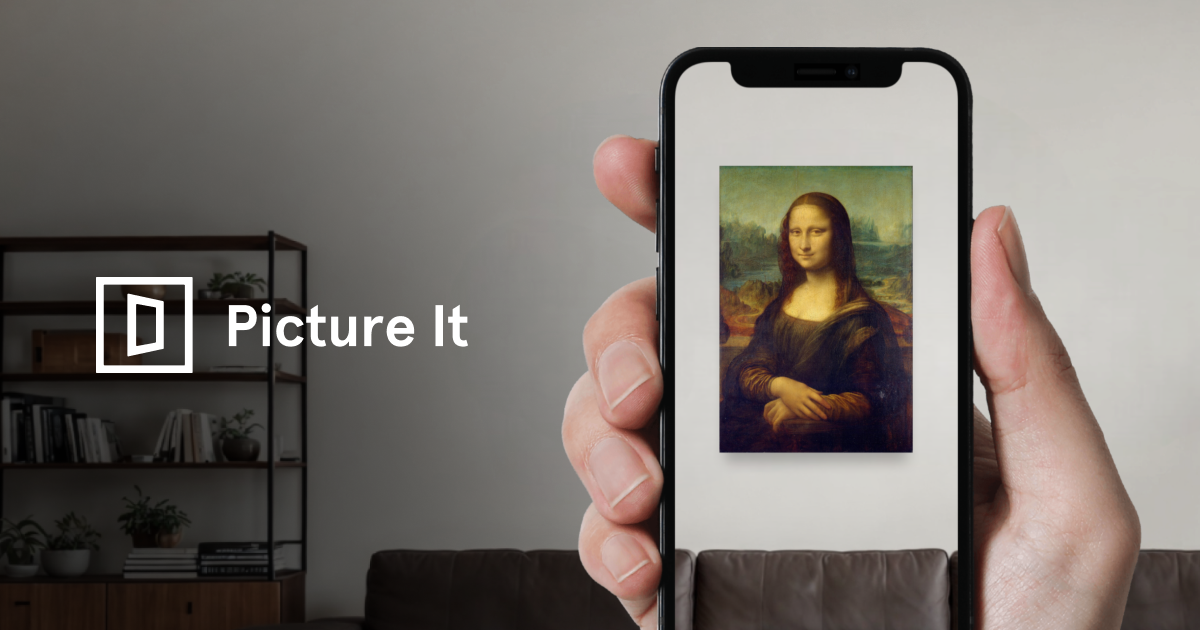
There's no code required, no 3D designer to hire, and no per-session fees that scale unpredictably with your traffic. The AR button appears directly on your product pages and works on any iOS or Android device without a separate app download.
Get the latest tips and tricks on growing your online art business - delivered weekly to your inbox
Install Picture It for a 14-day free trial, cancel anytime.